
Adjusting the Belgrave–Gembrook Return Allocation
Overview
Use this procedure to change the capacity for the Belgrave – Gembrook Return allocation — the full return journey product, typically set to 56 seats. This procedure includes an extra step: you must also update the Allocation Group to match the new value, otherwise the seat reservation will be out of sync.
How Capacity is Structured
Each leg on a Belgrave–Gembrook service has a total capacity of 176 passengers, made up of two components:
| Component | Capacity | Notes |
|---|---|---|
| Bel - Lak & Lak - Gmb Return / single-journey passengers | 120 | Covers Bel–Lak, Lak–Gem, and return equivalents |
| Belgrave – Gembrook Allocation (Return) | 56 | Full return journey product; seats are reserved via Allocation Groups |
| Total per leg | 176 |
Steps
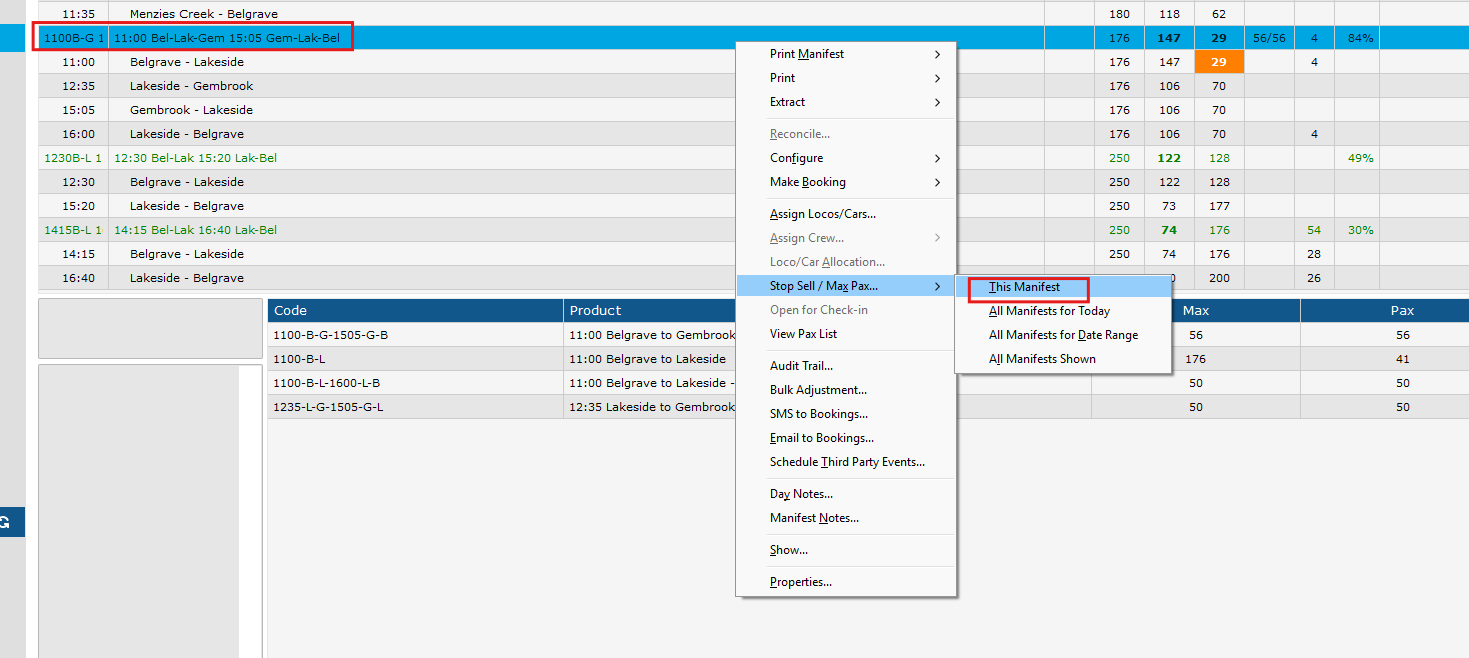
- In Sightseeing > Manifests, locate the relevant manifest.
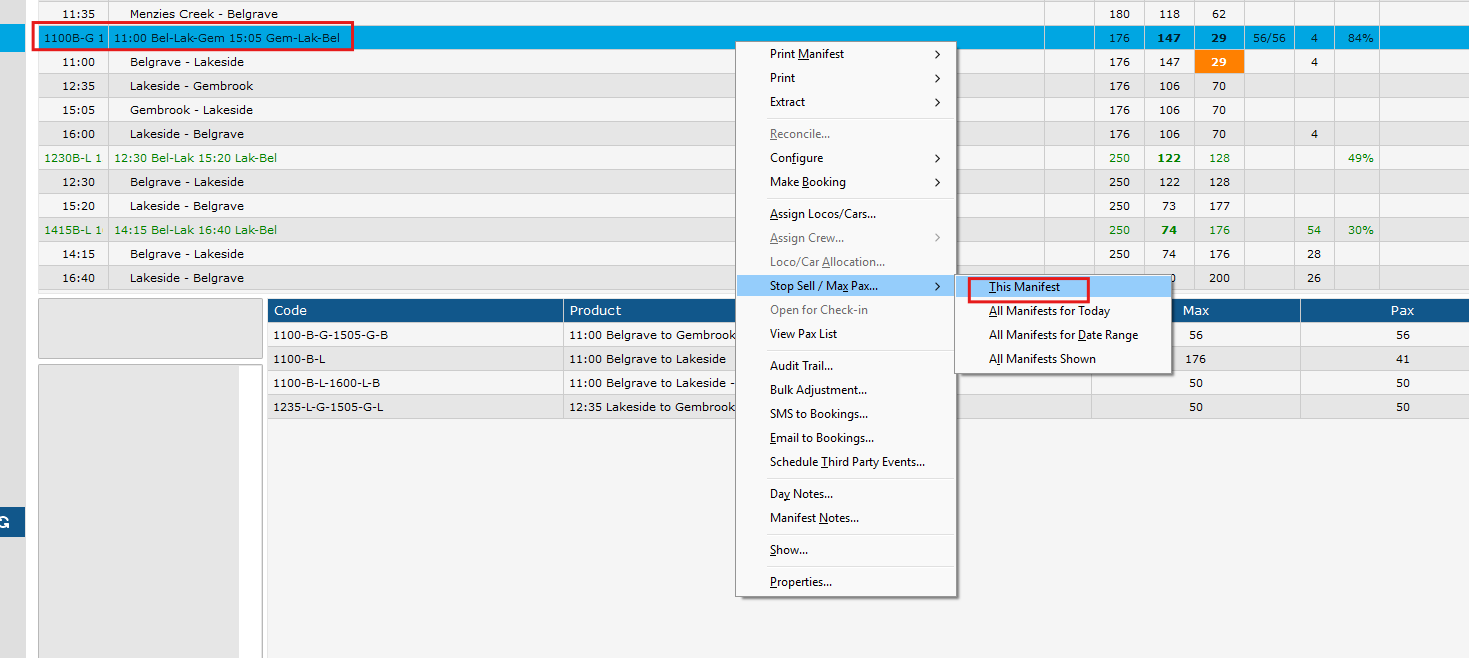
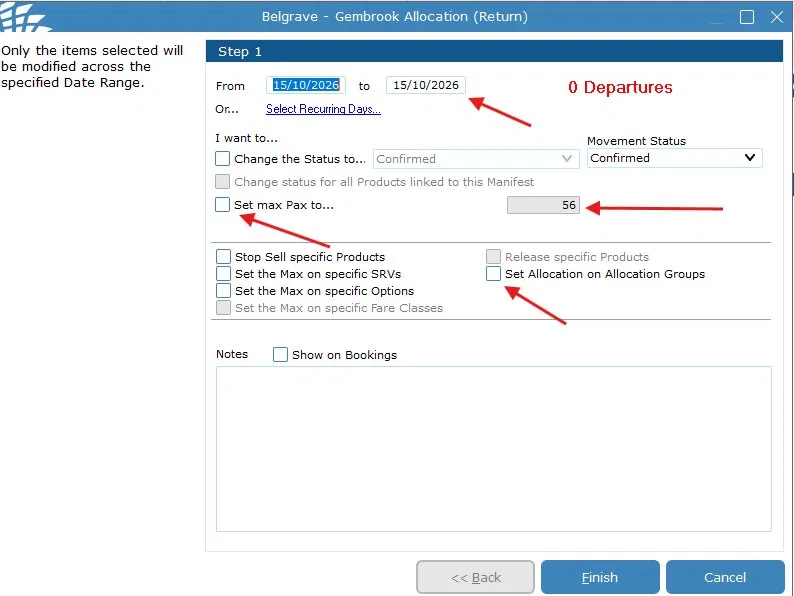
- Right-click on the manifest > Stop Sell/Max Pax > This Manifest
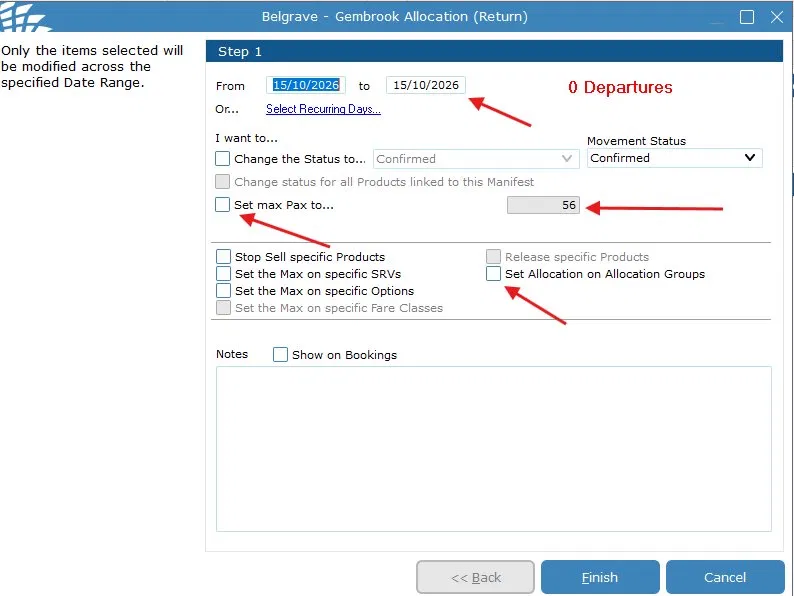
- In the dialog:
- Set the From and To date range, or use Select Recurring Days… as needed.
- Tick Set max Pax to… and enter the new capacity value.
- Tick Set Allocation on Allocation Groups — this is critical and must not be skipped.
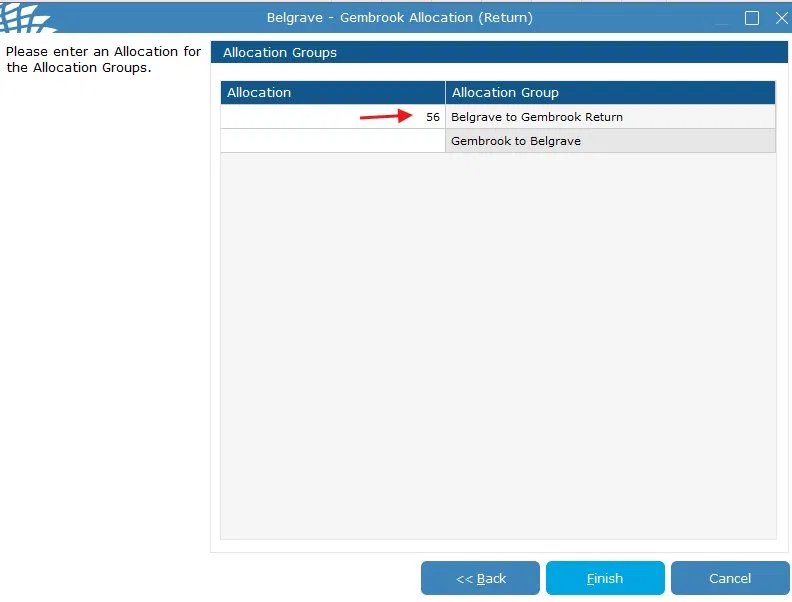
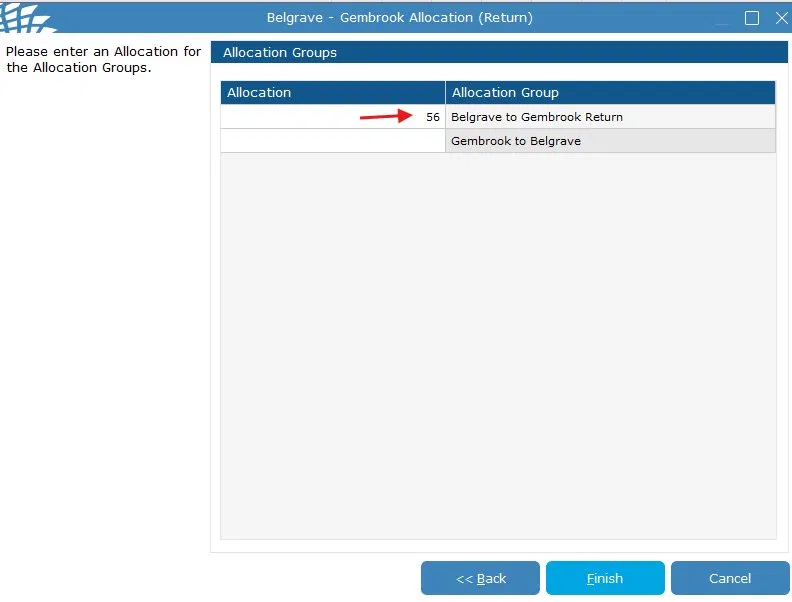
- Click Finish. The Allocation Groups screen will appear.
- On the Allocation Groups screen, find Belgrave to Gembrook Return and set its Allocation value to the same number entered for max Pax in the previous step.
- Click Finish to save.
- Does the entire train capacity need to be increased because of this?
If yes, please also adjust the manifest accordingly — see the Adjusting the Main Manifest Capacity guide.
An example of this would be an extra carriage being added to the carriage set specifically for Bel-Gmb.
Important Notes
-
The "Set Allocation on Allocation Groups" checkbox must always be ticked when changing this leg. Skipping it will cause a mismatch between the max Pax limit and the reserved seat allocation, which may result in overbooking.
- Only update the Belgrave to Gembrook Return allocation group. Leave Gembrook to Belgrave blank unless specifically instructed otherwise.
- This leg's capacity does not change automatically when you adjust the main manifest — both procedures must be performed independently if both values need updating.